How to Promote Your Music in 2026: The Ultimate Guide


You made the music. Now what?
Getting your tracks heard in 2026 requires more than uploading to Spotify and hoping for the best. The landscape has shifted. Algorithms are smarter, attention spans are shorter, and the competition is fiercer than ever. But here's the good news: the tools available to independent artists have never been better.
This guide breaks down how to promote your music across Spotify, YouTube, and social media. No fluff. Just strategies that work.
Why Multi-Channel Music Promotion Matters
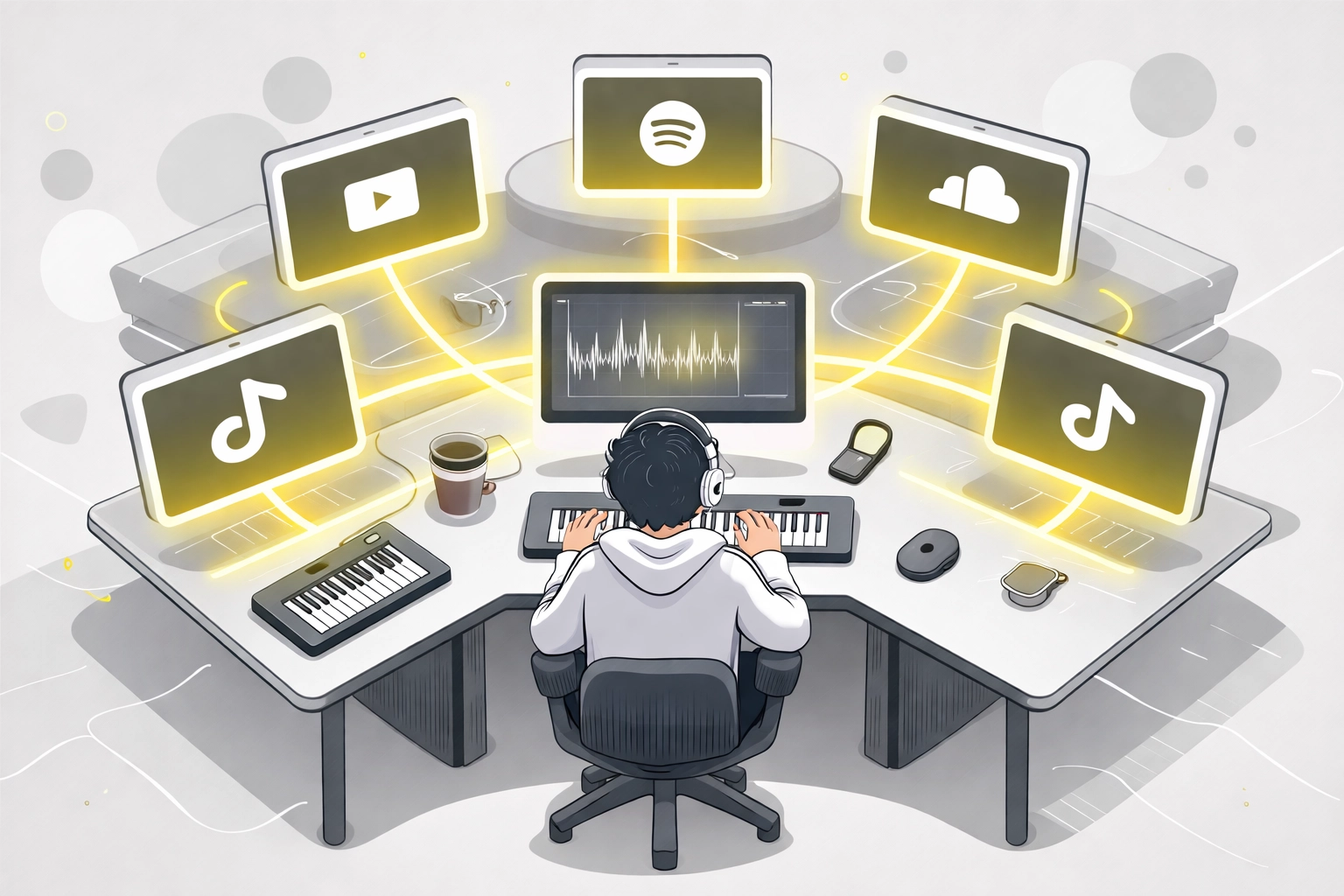
Relying on a single platform is risky. TikTok could throttle your reach tomorrow. Spotify's algorithm might change next week. The artists who build sustainable careers spread their presence across multiple channels.
A multi-channel approach protects you. It also creates multiple entry points for new fans to discover your work. Someone might find you on Instagram Reels, then follow you to Spotify, then join your email list. Each touchpoint strengthens the connection.
The goal? Meet listeners where they already are.
How to Promote Music on Spotify
Spotify remains the dominant force in music discovery. Playlist placements drive over 60% of how listeners find new music. Understanding this ecosystem is essential.
Editorial and Algorithmic Playlists
Two types of playlists matter most:
Editorial playlists are curated by Spotify's team. You can submit unreleased tracks through Spotify for Artists at least seven days before your release date. Be specific about your genre, mood, and the story behind the track.
Algorithmic playlists like Discover Weekly and Release Radar are generated based on listener behavior. To get picked up, you need strong engagement metrics in your first week. Pre-saves, early streams, and saves all signal to the algorithm that your track deserves wider distribution.
Key Metrics to Track
After release, monitor these numbers:
- Playlist adds per week
- Stream uplift within 7-14 days
- Save-to-stream ratio
A high save rate tells Spotify that listeners want to return to your music. This boosts your algorithmic potential significantly.
Spotify's Promotional Tools
Marquee and Showcase are paid tools that let you re-engage listeners who have drifted away or highlight tracks in specific territories. Think of them as pacing controls rather than just ads. They help you maintain momentum between releases.
YouTube: The Long Game
YouTube operates differently than streaming platforms. It rewards consistency and searchability. A well-optimized video can generate streams for years.
Content Types That Work
- Official music videos: These remain valuable for establishing your visual identity.
- Lyric videos: Lower cost to produce, and they perform well in search.
- YouTube Shorts: Short-form vertical videos that compete directly with TikTok and Reels.
- Behind-the-scenes content: Shows your process and builds connection with viewers.
Optimization Basics
Titles, descriptions, and tags matter. Include relevant keywords naturally. If someone searches "chill indie pop 2026," your track should have a chance of appearing.
Create playlists on your channel grouping your content by mood or release. This keeps viewers watching longer, which YouTube's algorithm rewards.
For dedicated YouTube growth strategies, Simple Social offers specialized YouTube promotion services designed for independent artists.
Social Media: TikTok and Instagram
Short-form video content drives discovery on social platforms. The same 15-30 second clip can work across TikTok, Instagram Reels, and YouTube Shorts. One creative session becomes three distribution opportunities.
What Performs Well
- Hook viewers in the first second
- Show your face when possible
- Use trending sounds strategically (but don't force it)
- Tell micro-stories around your music
You don't need to go viral. Consistent posting builds momentum over time. Aim for content that resonates with your specific audience rather than chasing mass appeal.
Cross-Posting Strategy
Post the same content across platforms with minor adjustments. TikTok favors raw, unpolished content. Instagram tends to reward slightly more polished visuals. YouTube Shorts falls somewhere in between.
Track which platform delivers the best results for your genre and double down there.
Building Your Community
Casual listeners come and go. Superfans stick around. They buy tickets, share your music, and support your career long-term.
How to Identify and Nurture Superfans
Look for listeners who:
- Save your tracks
- Add you to their personal playlists
- Comment on your posts
- Attend your shows
Reward this behavior. Offer exclusive access to unreleased tracks. Respond to comments. Recognize them publicly. Small gestures build loyalty.
Email Lists Still Matter
Social platforms control your reach. Email gives you direct access to your audience. Build your list from day one. Use it to announce releases, share updates, and offer exclusive content.
Working with Music Promotion Services
Handling every aspect of music marketing alone is time-consuming. Music promotion services can accelerate your growth if you choose the right partner.
What separates legitimate services from scams?
- Real playlist placements (not bot-driven streams)
- Transparent reporting
- Focus on organic growth metrics
At Simple Social, over 10,000 artists have used our platform to grow their presence across Spotify, YouTube, and social media. Our real-time dashboard lets you track campaign performance as it happens. No guessing. No waiting for reports.
We also connect artists with influencers and curators who align with their genre and audience.
Data-Driven Release Planning
Releasing music without understanding your audience is guesswork. Data helps you make informed decisions.
What to Analyze Before Release
- Optimal release timing: When are your listeners most active?
- Pre-save performance: Strong pre-save numbers signal demand to algorithms.
- Historical streaming data: Which of your past tracks performed best? Why?
Artists who analyze this data before release see up to 40% better algorithmic performance in their first week.
Competitor Analysis
Study artists in your lane. Which playlists feature them? Which curators are driving their discovery? This information helps you identify opportunities for your own music.
AI Tools in Music Marketing
AI has changed how artists approach promotion. Use it for:
- Generating short video clips with subtitles
- Optimizing social media copy
- Analyzing trends in your genre
- Automating repetitive tasks
But don't let automation run without direction. Set clear goals and track performance metrics. AI optimizes toward what you measure. Make sure you're measuring the right things.
Action Steps to Start Today
Ready to put this into practice? Here's your checklist:
- Claim your Spotify for Artists profile and submit your next release for playlist consideration.
- Create a content calendar for TikTok, Instagram, and YouTube Shorts.
- Start building your email list if you haven't already.
- Analyze your streaming data to identify patterns and opportunities.
- Research playlist curators in your genre and begin outreach.
- Consider a music promotion service like Simple Social to amplify your efforts.
Music promotion in 2026 combines algorithmic understanding with human connection. Treat each platform as part of a larger ecosystem. Create content that travels. Build genuine relationships with fans and curators.
The artists who succeed aren't necessarily the most talented. They're the ones who show up consistently and adapt to what works.
Your music deserves to be heard. Now you have the roadmap to make it happen.